


Society
The Pulse of the Ballot: From 1991 to the 2026 "Reset"


An Independent Newsweekly

Society
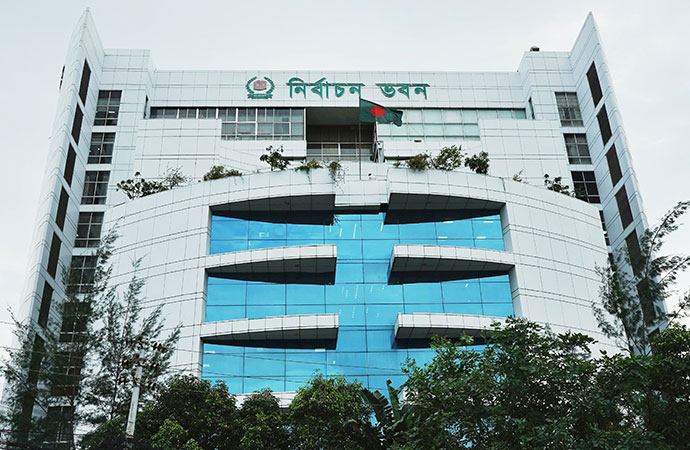
Photo: UNB
For a long time, voting in Bangladesh was a national festival. Then, it became a point of deep pain. After years of predictable outcomes and one-sided ballots, the air in the tea stalls and university campuses feels different. There is a sense of "reset", a hope that the ballot box will once again belong to the people.
Now, as the winter of 2026 settles over Dhaka, it has become a symbol of a "Second Independence".
The "See-Saw" Era (1991-2008)
For twenty years, Bangladesh followed a predictable but competitive rhythm. Under the unique "Caretaker Government" system, the two giants the Bangladesh Nationalist Party (BNP) and the Awami League (AL) took turns at the helm.
In 1991, the nation celebrated its first post-dictatorship dawn. The BNP, led by Begum Khaleda Zia, secured 140 seats with a 30.81% vote share. It was a razor-thin victory over the Awami League's 30.08%, but it established a precedent for a fair fight.
The pendulum swung back in June 1996. Sheikh Hasina led the Awami League to 146 seats, marking the party's return to power after 21 years. The trend of massive swings continued into 2001, when the BNP-led alliance crushed the competition with 193 seats, and reached its peak in 2008. That year, a record 87% turnout driven by a hunger for stability after emergency rule gave the Awami League a historic 230-seat mandate.
The Decade of Disconnect (2014-2024)
The data shows that after 2008, the "competitive" nature of elections began to wither. With the abolition of the Caretaker system, controversy became the default.
The 2014 election remains a scar on the democratic record; over half the parliament (153 seats) was "elected" without a single vote being cast due to an opposition boycott. By 2018, even though turnout officially hit 80%, the "Night Voting" allegations, the claim that boxes were stuffed before the sun rose shattered public trust.
The 12th Election in 2024 was the final straw. It was another one-sided win for the AL, but it lacked the people's heart. The resulting frustration fueled the student-led "July Revolution" of 2024, which eventually toppled the 15-year administration and paved the way for the current interim setup.
The 2026 Hype: What's Actually Happening Now?
As we enter the final month of campaigning, the political landscape is no longer a simple see-saw between two parties. With the Awami League suspended from this cycle, a new and complex power struggle has emerged.
1. The "July Charter" Referendum
On February 12, voters will receive two ballots. One is to pick their MP; the other is a "Yes" or "No" vote on the July Charter. This massive constitutional reform package is the centerpiece of the 2026 hype. It aims to ensure that no single leader can ever become an autocrat again by introducing Prime Ministerial term limits and a more balanced distribution of power.
2. The Rise of the "Third Force": NCP and Jamaat-e-Islami
The old BNP vs. AL rivalry has been replaced by a complex, three-way struggle. While the BNP, now under the active leadership of Tarique Rahman, remains a formidable powerhouse, they face a radical challenge from an unexpected alignment.
The National Citizen Party (NCP), a centrist, student-led force born from the 2024 uprising has entered into a strategic electoral understanding with Bangladesh Jamaat-e-Islami. This "Third Force" is bridging the gap between revolutionary Gen-Z energy and a disciplined, grassroots organizational base. Together, they are campaigning on a platform of "State Repair," aiming to dismantle the old political patronage systems.
3. The Expatriate "Wildcard"
For the first time in history, the "Remittance Warriors" are no longer silent spectators. Over 7.7 lakh expatriates living in the Middle East, Europe, and America have registered to cast postal ballots. As of last week, ballots have already been dispatched to over 120 countries. This overseas vote is expected to be a massive "wildcard" in at least 40 tight constituencies.
4. The Return of the "No-Vote"
The Election Commission has reintroduced the "No-Vote" as the ultimate accountability tool. If voters in a constituency are unhappy with all the candidates on offer, they can officially reject them. In cases where the "No-Vote" wins the majority, the election in that area is declared void and must be re-held with entirely new candidates.
If you walk into a tea stall today, people aren't talking about "winning." They are talking about fairness. After years of one-sided polls, the hype in 2026 is driven by the simple, radical excitement that, for the first time in a generation, nobody knows who will win.
Md Arman Hossen, Product Analyst, United News of Bangladesh (UNB)
A Independent Newsweekly
© Copyright 2026 | Designed by ARK Reepon & Developed by Cosmos Group Software Team





Leave a Comment
Recent Posts
Mosque in my memory
Recently, I saw a pamphlet published by the Islamic Foundation which s ...
Why the fastest-growing Ebola ...
The Ebola outbreak in eastern Congo is now the fastest-growing one in ...
US reimposes its blockade on Iran after Tehran’s att ..
Oil Shocks Are No Longer So Shocking
Bangladesh urged to build AI capacity, strengthen di ..
Metamorphosis: Bishwajit Goswami on Art, Nature and ..